
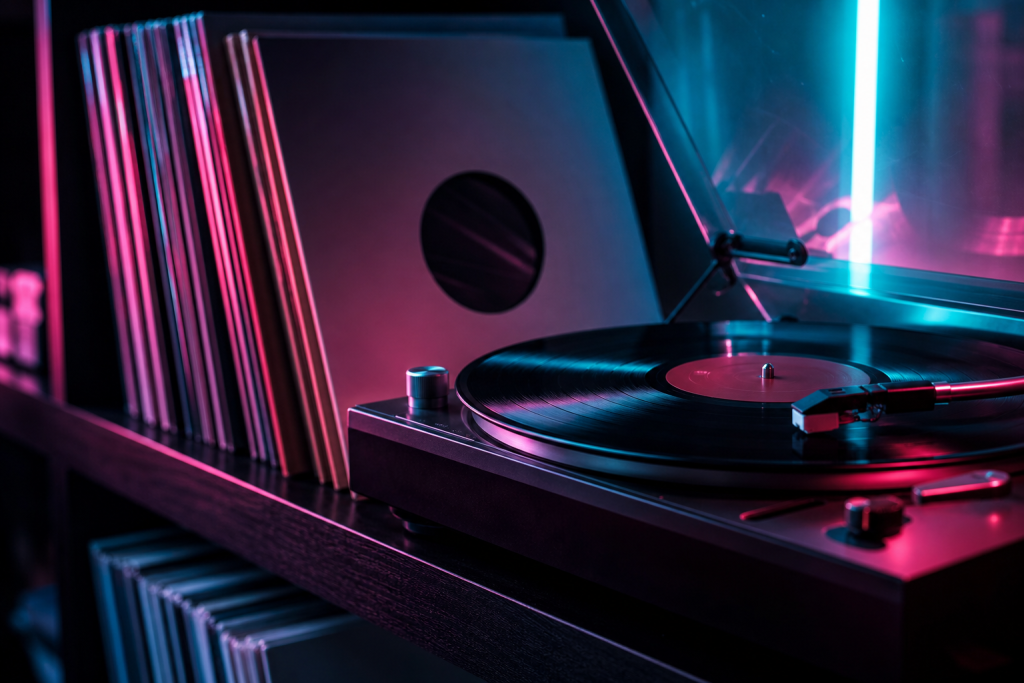
DJing did not start in a nightclub. It started with radio hosts playing records for an audience they could not see, then moved into dancehalls, discos, and eventually the club culture we know today. Here is the short version of a surprisingly long story.
Radio Jocks: The First DJs
In the 1940s and 1950s, radio announcers — “disc jockeys” — built shows around records. Most played the hits, but a few changed the rules. In Jamaica, sound system operators like Clement “Coxsone” Dodd and Duke Reid took the radio concept out of the studio: they loaded turntables and amplifiers into trucks, played records in the street, and let the crowd pick the winners. The DJ as a live performer was born there, long before the club DJ existed.
Disco: The DJ Becomes the Band
In the late 1960s and 1970s, disco DJs replaced live bands in dance venues and learned to keep people dancing by playing records continuously. That forced a new skill: matching the tempo of one record to the next so the beat never stopped. Club DJs like David Mancuso and Larry Levan built sound systems and intimate dance floors around the music, and the DJ became the center of the night — not a human jukebox, but a curator with taste.
Hip-Hop: The Turntable Becomes an Instrument
In the Bronx in the 1970s, DJs like Kool Herc extended the instrumental breaks dancers loved, and Grandmaster Flash and Grand Wizard Theodore turned the turntable itself into an instrument — backspins, cutting, and scratching. That is the moment DJing split into two crafts: the DJ who mixes records for dancers, and the DJ who plays the turntable as an instrument. Both descend from the same roots.
House and Techno: The Producer-DJ
In the 1980s, Chicago house and Detroit techno brought the studio into the booth. DJs began producing the records they played, and the line between producer and DJ blurred — a line that still defines electronic music today. The 1990s and 2000s added digital software, controllers, and finally streaming, making the skills more accessible than ever.
Why the History Still Matters
Every era left a layer in the craft: radio taught us to talk to an invisible crowd, disco taught us to keep the beat continuous, hip-hop taught us to play the turntable, and the club era taught us to read a room. When you practice beatmatching or plan a playlist, you are using tools invented across fifty years of DJ culture.
What the Future Holds
Software and streaming will keep lowering the barrier to entry, but the core job has not changed since Kool Herc: move people with recorded music, live, in the room. The equipment changes; the job does not.
Part of that history is your identity as a DJ. Stickerlight’s custom DJ logo designs help you carry your own mark into it.